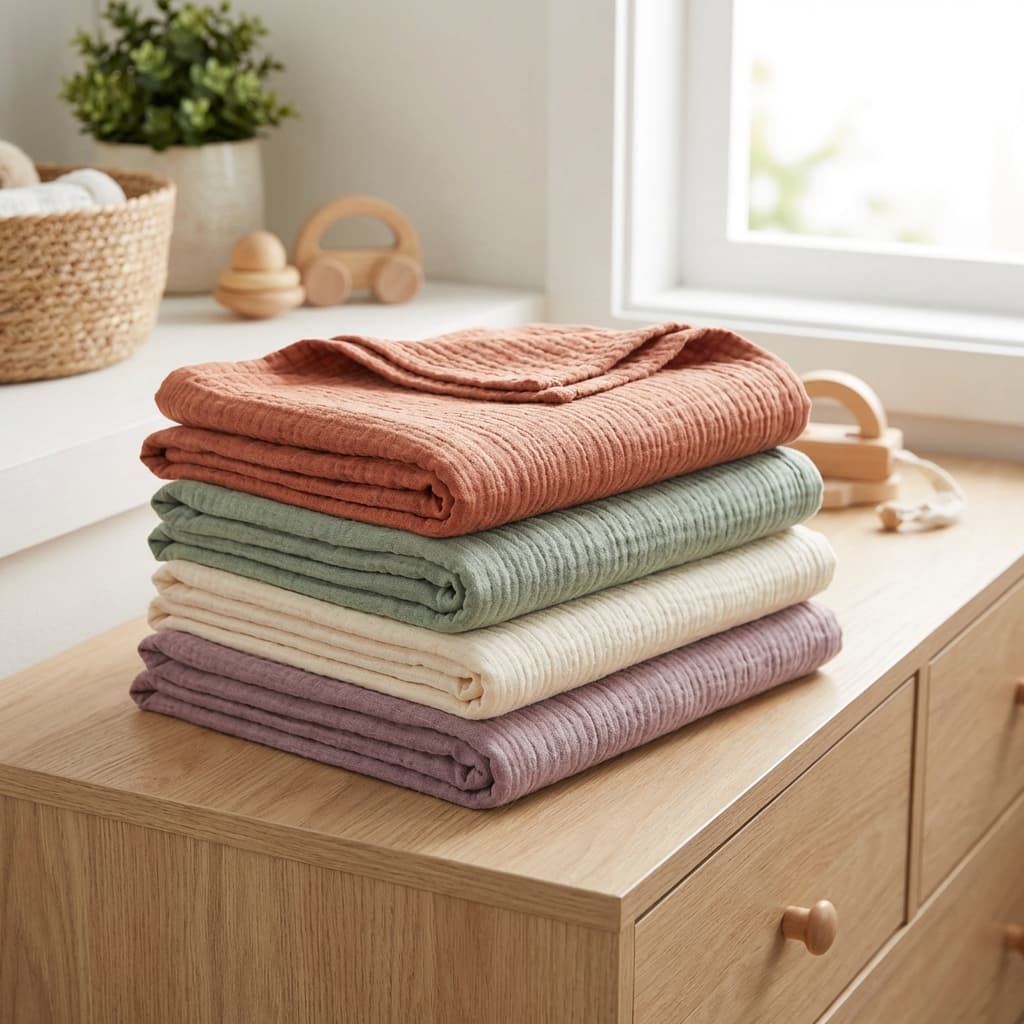
Baby heat rash clothes: what works and what makes it worse
Loose, open-weave cotton beats bare skin. Why covered is cooler, where rash starts, and what to change at night. From parents raising a kid in Bali.
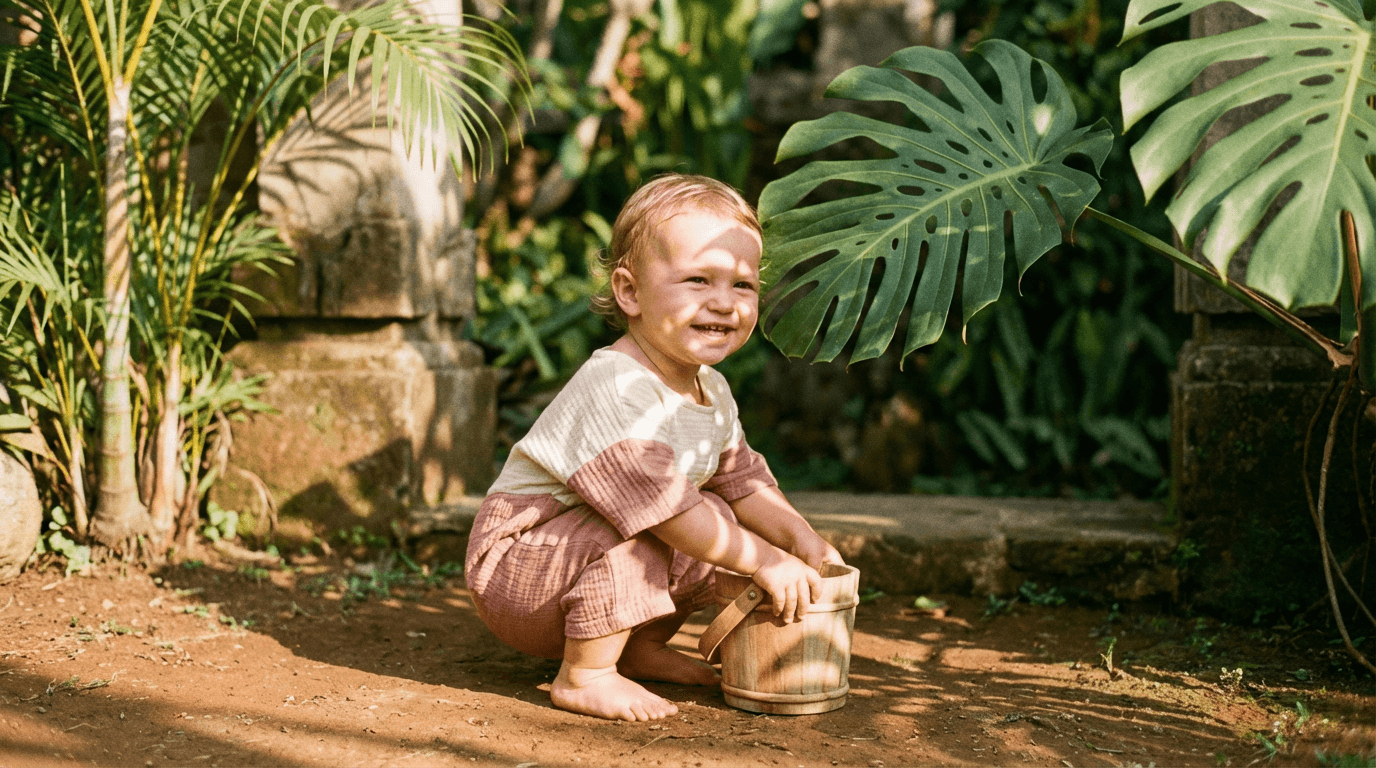
Dress your baby in one loose layer of open-weave cotton, such as muslin, with room at the neck, underarms and thighs. Skip synthetics, tight elastic and extra layers. Keep skin covered rather than bare, and change them as soon as the fabric is damp. That is most of the battle.
Our daughter was born in Bali in 2021, and heat rash found her early. Most of what we tried first made it worse.
Why heat rash happens, in plain terms
Babies sweat through ducts that are still maturing, so they block easily. When a duct blocks, sweat gets trapped under the skin instead of evaporating off it, and the skin answers with the small red or clear bumps, sometimes called prickly heat.
Three things drive it: heat, trapped moisture, and friction. A tight cuff or waistband rubs the same damp patch all afternoon. Humidity is the multiplier, because sweat that cannot evaporate just sits. None of this is about sun.
Where it actually shows up
In the shady creases, not the sun-exposed parts. The neck folds first, then the inner thighs and nappy line, the chest under a carrier, and the back, because babies spend hours lying on surfaces that do not breathe: car seats, prams, a cot mattress on a warm night. Bumps across the back after a nap and none on the arms is not a mystery. That is the mattress.
Covered is cooler than bare
The instinct in heat is to strip a baby down to a nappy. It backfires twice: bare skin takes tropical sun directly, and it sticks to every surface it touches, creating exactly the pressed, damp patches where rash starts.
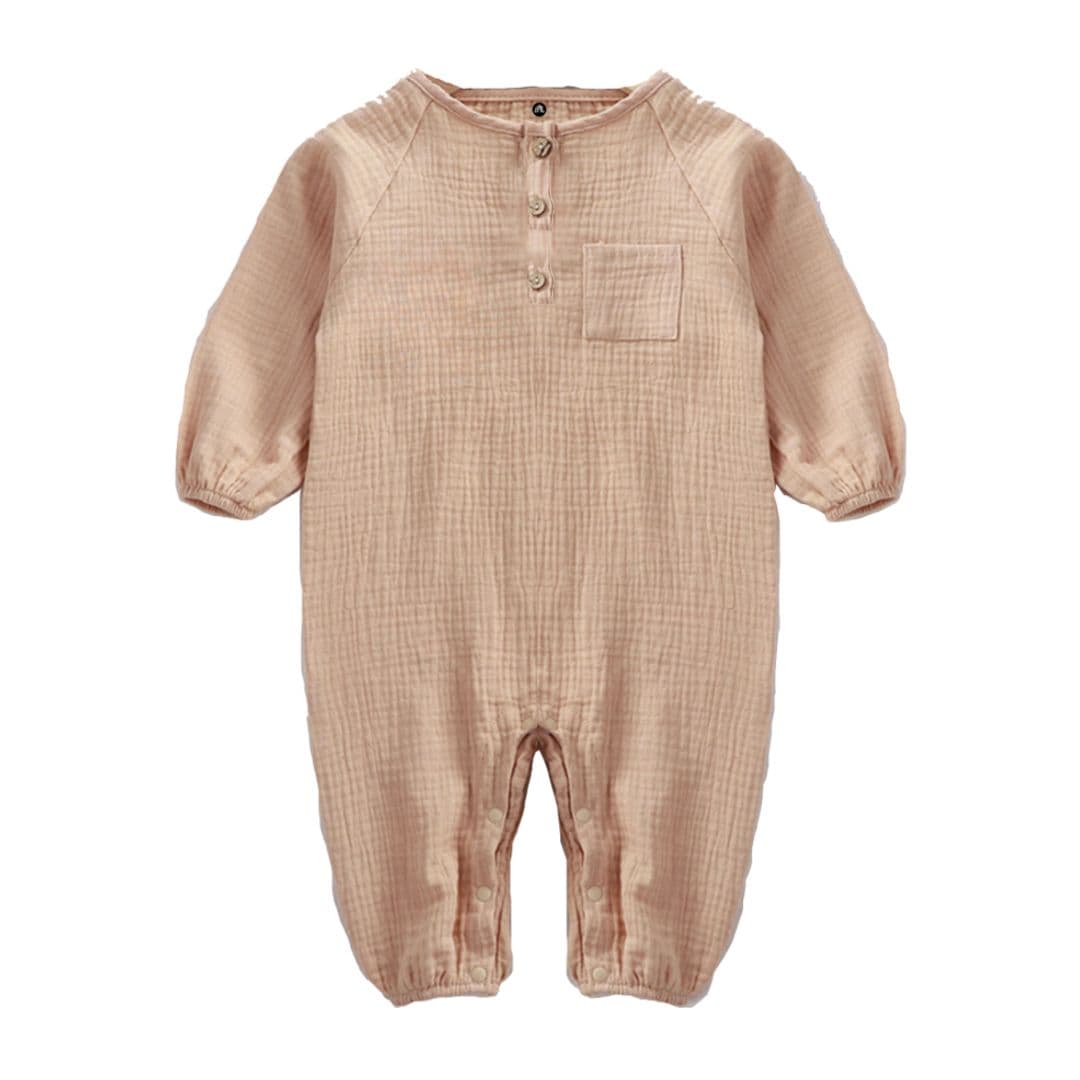
A loose layer of open-weave cotton shades the skin, soaks up sweat so it can evaporate away from the body, and keeps moving air against the skin. Covered is cooler, as long as the cover breathes. Stripping down is the most common mistake we see, which is why it leads the Bali baby packing list.
The weave matters more than the weight
Lightweight is on every label and it is the wrong thing to check. A very thin, tightly woven synthetic behaves like cling film once a child sweats in it. Thinness is not breathability. Air moving through the weave is. Hold a piece up in the shop: an open weave shows daylight.
This is why we chose double-layer muslin for our daughter. One layer of muslin is an open net, breathable but see-through and flimsy. Two layers keep the airflow, add softness and opacity, and survive being washed several times a week, which here they will be. If bamboo is tempting you, muslin vs bamboo covers what happens once a child actually sweats in each.
Fit is the other half. Air has to get in: room at the neck, underarms and thighs, flat seams, nothing elastic gripping a damp crease.
Nights are different
A lot of heat rash brews overnight. Tropical coastal nights barely cool down, and a sleeping baby lies still on the same patch of mattress for hours. The back and neck stay damp until morning.
At night: one thin layer, never the day's outfit worn on, no extra layer for reassurance. A fan moving air across the room, not aimed at the cot. Judge warmth by the back of the neck, not hands or feet, which always run cool. If they wake sweaty, change the layer instead of removing it.
The wash and rewear reality
In humidity, worn once means damp, and re-dressing a child in not-quite-dry fabric puts moisture straight back against the skin. A small rotation washed constantly beats a big wardrobe. Muslin dries in a couple of hours on a shaded line. Five pieces that breathe beat fifteen that do not.
What we actually do
- One loose layer in the day, long sleeves in open sun
- Nothing underneath it, no singlet or vest
- Pat neck folds and thigh creases dry after sweat or a swim, before fresh clothes
- Change at damp, not at the next scheduled outfit change
- Midday in shade or indoors, outside mornings and late afternoons
- One thin layer at night, fan moving air across the room
- Bare-skin time on a dry muslin wrap after the bath, so creases dry fully
When it is not heat rash
Heat rash is small bumps in the creases that calm once skin is cool and dry. If a rash looks angry or is spreading, blisters or weeps, comes with a fever, or your baby seems unwell, see a doctor rather than adjusting clothes. Same if it is not settling after a couple of cool, dry days. This is a clothing article, not medical advice. Reassurance is cheap. Go get it.
Heat rash questions we actually get
Should my baby wear a singlet under their clothes in the heat?
No. A singlet traps sweat between two layers of fabric across the chest and back, exactly where rash starts. One layer outside. If icy air conditioning is the worry, carry a layer to add indoors.
Can babies get heat rash in air conditioning?
Yes. It is trapped sweat where skin presses against something, not the weather report. A baby in a cool room still sweats under a carrier panel, a car seat harness or a snug waistband, and those patches are where bumps appear.
How fast should it settle once I change what they wear?
With our daughter, skin usually looked calmer within a day or two of staying cool and dry. That is experience, not a promise. If it is not settling in that window, or getting worse, see a doctor.
From our house to yours
We source double-layer muslin pieces designed in Bali, for exactly this weather. If your child keeps breaking out and you cannot tell what to change first, message us. We have been the parents searching this at midnight, and we usually reply the same day.
With love from Bali, Vanessa and Bob
From one parent to another
Dressing a little one for the heat?
Join the EPIC family for honest guides on dressing kids in the tropics, first look at new pieces, and 10% off your first order.
No spam, just the good stuff. Unsubscribe anytime.
Shop the pieces
More from Knowmads Bali
Born in Bali · Tested in the tropics
Muslin cotton, made for the heat
Breathable, soft, and built for real tropical days. Our onesies & playsuits are where most families start.