The Bali baby packing list from parents who live here
What actually goes in the bag for a baby in Bali, and what to leave at home, from two parents raising their daughter on the island.
What actually goes in the bag, from two parents who pack it here
We live in Bali. Our daughter was born here in 2021, which means we have never packed for a Bali trip in our lives. We have done something harder: we have watched hundreds of families arrive with the wrong suitcase, and we have spent four years working out what our own kid actually needs on an ordinary Tuesday in the heat.
This list is the result. It is opinionated. It tells you what to leave at home, which is the part most packing lists are too polite to do.
Start here: the one rule that decides everything
Bring the things that are hard to buy here. Buy everything else when you land.
Bali has supermarkets, pharmacies, and a baby shop in every tourist town. Nappies, wipes, bottled water, snacks, basic medicine, buckets, floaties, and cheap clothes are all available and mostly cheaper than at home.
What is genuinely hard to find, or expensive, or not what you are used to:
- Sunscreen you trust, especially mineral formulas for small children
- Clothing actually cut for this climate rather than for a shop window
- Your specific brand of nappy cream, barrier cream, or eczema treatment
- Familiar over-the-counter medicine in familiar doses
- A carrier that fits you properly
That is the whole list of things worth suitcase space. Everything below is detail.
The clothing list, for one week
Numbers assume you will do laundry. You will. Every villa has a machine, a laundry service, or a place down the road that charges by the kilo and returns it the next day. Muslin dries in a couple of hours on a line in the shade.
Per week, for one baby or toddler:
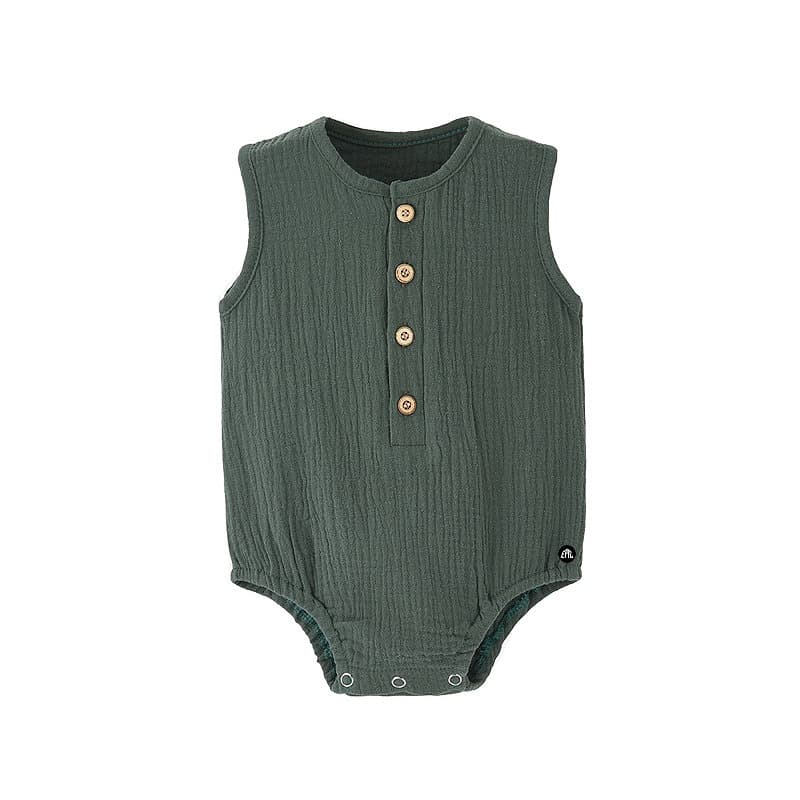
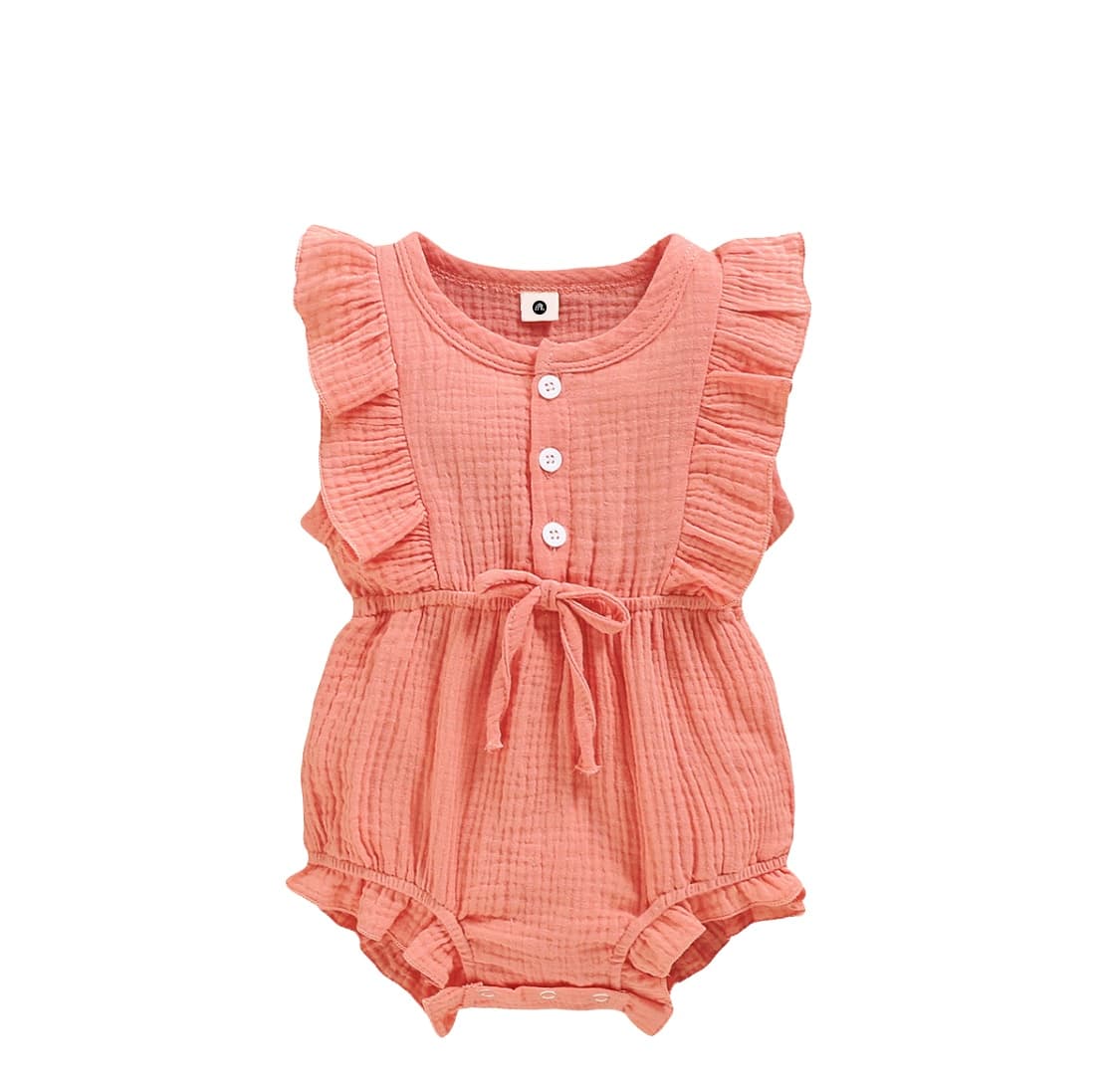
- 5 to 7 light single layers. Onesies, rompers, or simple two-piece sets. This is 90% of what they will wear.
- 2 long-sleeve layers. Not for warmth. For sun cover and for restaurants. More on both below.
- 2 pairs of loose bottoms. Soft waistband, nothing elastic that digs in. Crawlers and new walkers spend all day on their knees.
- 1 pair of long, light trousers. For temples, for dusk when the mosquitoes come out, and for the highlands.
- 1 sleep layer. Thin. Bali nights on the coast do not really cool down.
- 2 sun hats. Bring two because one will be left at a warung. Chin ties or it comes off in the first ten minutes.
- 2 swim sets plus swim nappies. You will be in water more than you planned.
- 1 light towel or muslin wrap. Shade cloth, changing mat, pram cover, floor for a sandy nap.
- 1 spare outfit in your carry-on. Not in the checked bag. In the bag on your lap.
Leave at home: jeans, anything fleece or hooded, thick sleepers, structured shoes, novelty outfits for a nice dinner that will not happen, socks beyond one pair, and "performance" synthetics, which sound right for heat and are the wrong answer for skin that is already sweating.
If you are travelling for a month or more, the number does not go up much. You pack for the wash cycle, not for the days.
The seven things people get wrong
This is the part worth reading twice.
1. Stripping the baby down to a nappy
The instinct in heat is to take clothes off. It backfires. Bare skin in equatorial midday sun burns fast, and bare skin in direct sun gets hotter, not cooler. A loose long-sleeve layer in a light open weave shades the skin and lets air move underneath it. Covered is cooler than bare. This is the single most common mistake we see on Bali beaches.
2. Packing for the heat and forgetting the cold
Bali is about 30 degrees outside and about 18 inside. Restaurants, malls, cinemas, spas, the airport, and most transfer cars run the air conditioning hard. A morning at a waterfall and an afternoon in an air-conditioned cafe are two different climates within the same hour. The two long-sleeve layers on the list are for indoors, not outdoors.
3. Assuming the whole island is the same temperature
The coast, Canggu, Seminyak, Uluwatu, Sanur, is hot and humid day and night. Ubud is noticeably cooler, especially after dark. Munduk, Bedugul and Kintamani are genuinely cool at night, and if you are going up there you need a proper warm layer that would look absurd anywhere else on the island. Check your itinerary for altitude before you pack.
4. Bringing a stroller
Bali footpaths are broken, blocked, or absent. Temple complexes are steps. Warungs are narrow. Rice paddy paths are single file. A soft structured carrier goes everywhere a stroller cannot, which is most places. If you already own a stroller you love, bring it for the airport and expect to leave it in the villa.
5. Overpacking nappies and underpacking sunscreen
Nappies are on every shelf in Bali. Sunscreen you trust for a small child is the thing you will hunt for and pay a lot for. Reverse your instinct on these two.
6. Not planning for the skin, only for the sun
Sunburn is the risk everyone prepares for. Heat rash, nappy rash and fungal rash are the ones that actually happen, and they arrive faster here than at home, especially in the neck folds, inner thighs and wrists. Pack your preferred nappy cream and a barrier cream and start using them before you see a problem rather than after.
7. Not asking about the pool
Most Bali villas have a pool. Many are unfenced, level with the terrace, and a few steps from where your toddler sleeps. Ask the host before you book, not after you arrive. This is worth more than anything else on this list.
The non-clothing bag
- Sunscreen you already trust. For babies under six months, most paediatric guidance is shade and clothing rather than sunscreen. Ask your own doctor before the trip rather than working it out at the beach.
- Baby-appropriate mosquito repellent. Dusk is the moment. Reapply if they have been swimming or sweating.
- Nappy cream and a barrier cream. Yours, not a substitute.
- Oral rehydration sachets. Small, light, and the thing you will be glad you have at 3am.
- Infant paracetamol in a dose you recognise. Local pharmacies are good and widely available, but reading an unfamiliar label with a sick child is not the moment to start translating.
- An antifungal cream. Heat rash in humidity is genuinely common.
- A soft structured carrier. See above.
- A thermometer.
- Bottled water for formula. Do not make up bottles with tap water. Bottled water is everywhere and cheap.
- Plug adapters. Indonesia runs 230V on the round two-pin plug, Type C and F.
- A car seat plan. Airport transfers and taxis will not have one. Decide in advance whether you are bringing yours, hiring one, or accepting the trade-off. Do not decide it in the arrivals hall.
The first day, honestly
You land at Ngurah Rai, and the heat arrives the moment the aircraft door opens. There is usually a queue. Your baby has been in air conditioning for six hours and is now in a humid hall in whatever you dressed them in at home.
Dress them for arrival, not for departure. One light layer, hat in your hand, spare outfit in the bag on your shoulder. Get water into them before the transfer, not after. Expect the first afternoon to be a write-off and plan nothing for it. Everyone sleeps badly the first night and it is fine by the second.
The wet season question
Roughly November to March is the wet season. This changes less than people expect. It is not cold. The rain is warm, usually arrives in the afternoon, and often stops within the hour.
What changes: things do not dry as fast, so pack one extra layer and give laundry an extra day. Mosquitoes are more active, so the repellent matters more. Pack a light rain layer if you like, but the temperature packing stays identical.
What to look for in the fabric, and why we ended up here
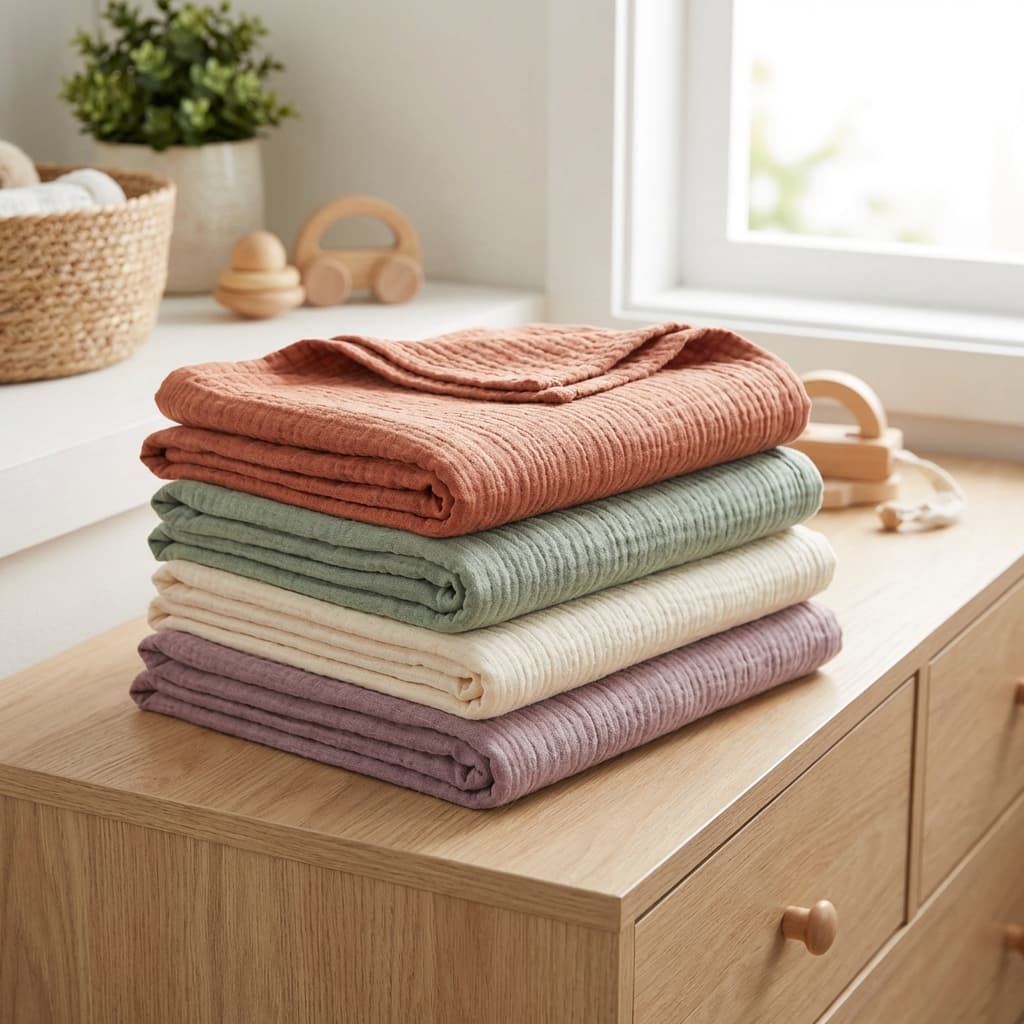
We chose double-layer muslin cotton for our own daughter, and the reason is specific rather than romantic.
Muslin is a plain weave with an open structure, so air moves through it instead of sitting against the skin. In humidity, that matters more than how thin something is. A very thin tightly-woven synthetic can be worse than a heavier open-weave cotton, because thinness is not the same thing as breathability. Doubling the layer keeps it from being see-through while keeping the airflow, and it holds up to being washed several times a week, which is what actually happens here.
What we look for, and what you should look for in any brand:
- An open weave. Air needs to travel through the fabric, not around it.
- A loose cut. Nothing gripping the waist, wrists or thighs. Air has to get in.
- Flat seams and no scratchy label. Friction points in sweat are where rash starts.
- Softness that survives washing. Anything that goes stiff after four washes is not a travel fabric.
- Colours you will actually use. Light for daytime heat. Something darker for dinner, because mango does not come out.
Sizing, plainly
Size up. This is not a sales line, it is the actual advice.
A slightly loose fit lets air circulate, which is the entire point. Snug clothing in heat is uncomfortable no matter how soft it is. Babies also grow through a trip. Muslin relaxes a little on the first wash, so a piece that fits perfectly in the shop is already the smaller of your two options.
Our sizes are cm codes, which map to ages like this:
| Size | Age |
|---|---|
| Newborn / 52 | 0 to 3 months |
| 59 | 3 to 6 months |
| 66 | 6 to 9 months |
| 73 | 9 to 12 months |
| 80 | 12 to 18 months |
| 90 | 18 to 24 months |
| 100 | 2 to 3 years |
| 120 | 3 to 4 years |
| 130 | 4 to 5 years |
Between two sizes, take the larger one.
If you want the clothes sorted before you fly
We source double-layer muslin pieces designed in Bali, in the climate they are for, and we ship worldwide with tracking, usually 7 to 14 days. If you are cutting it fine before a trip, message us on WhatsApp and we will tell you honestly whether it will arrive in time.
Thirty-day returns on unworn pieces. If something pills or tears, we will make it right.
Have a look at the shop when you are ready. And if you have a question this list did not answer, ask us. We are two people and one inbox, and we usually reply the same day.
With love from Bali, Vanessa and Bob
From one parent to another
Dressing a little one for the heat?
Join the EPIC family for honest guides on dressing kids in the tropics, first look at new pieces, and 10% off your first order.
No spam, just the good stuff. Unsubscribe anytime.
Shop the pieces
More from Knowmads Bali
Born in Bali · Tested in the tropics
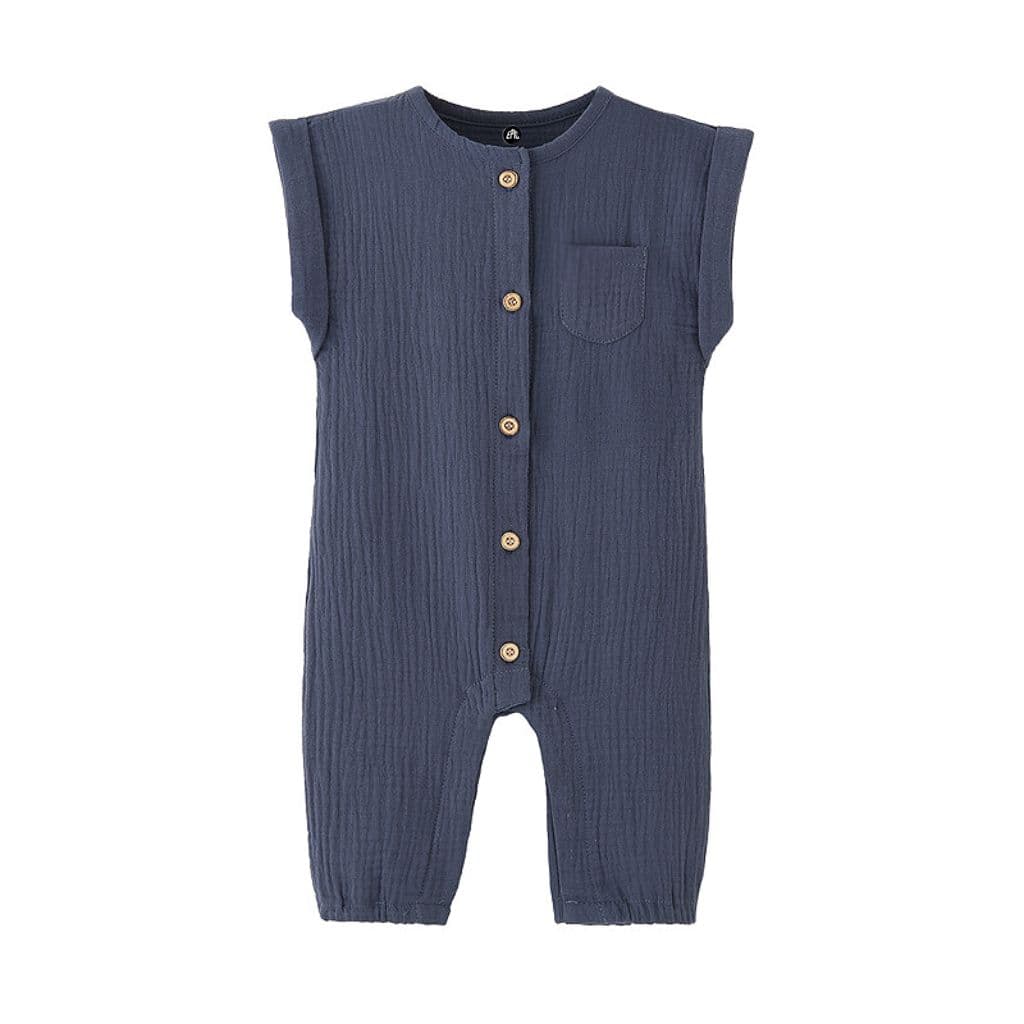
Muslin cotton, made for the heat
Breathable, soft, and built for real tropical days. Our onesies & playsuits are where most families start.