The Overheating Trap: Why Bali Toddlers Freeze-Then-Sweat Up North
The Overheating Trap: why Bali's tropical heat plus cranked-up AC on the flight home leaves toddlers freezing, then sweating, then sick, and how to dr

Dress your toddler in thin, breathable layers you can add or remove at each stage of the trip, not one heavy coat. Tropical kids swing between outdoor cold, an overheated car, a packed terminal and a warm cabin in the same afternoon, and their layers need to move as fast as the temperature does.
To stop a toddler overheating on a Bali-to-winter trip, use thin, breathable layers instead of one heavy coat: a light base layer worn the whole journey, a mid layer with snaps or a zip, and one outer coat removed the moment you're indoors. Most overheating happens in the car, terminal and cabin, not outside in the cold.
Families like ours, based in Bali year-round, know this particular kind of travel day. A child who has never needed a jacket suddenly needs four different temperatures managed in twelve hours, and the instinct is to pack heavy. That instinct is usually the trap.
Why the "one big coat" strategy backfires
It usually starts with good intentions. A child who has spent her whole life in shorts and bare feet is about to meet an Auckland winter or a Seoul January, and the instinct is to over-prepare: a heavy insulated coat, a warm layer underneath it, maybe a hat and mittens stacked on top. Outdoors, for the fifteen minutes you're walking between the car and the building, this works fine.
The problem is those fifteen minutes are a small fraction of the day. Most of a travel day happens indoors or in transit: a heated car, a terminal with the aircon fighting the crowd, a cabin that runs warmer than anyone expects, a hotel lobby, a restaurant. A toddler in a thick coat stays hot through all of it, far longer than she's ever cold, and stepping back outside afterward feels worse than the first time out.
What layering actually means for a toddler
Layering is dressing a toddler in separate, removable pieces, a base, a mid layer and an outer coat, instead of one heavy garment, so each piece can come off or go on independently as the temperature shifts. The fix isn't fewer clothes. It's clothes that separate into stages. A light base layer she can wear all day without adding bulk. A mid layer that's fast to get on and off, ideally with snaps or a front zip rather than something that has to go over her head while she's already cranky in a security line. Then one real outer layer, a jacket or coat, the only piece doing the work against the cold.
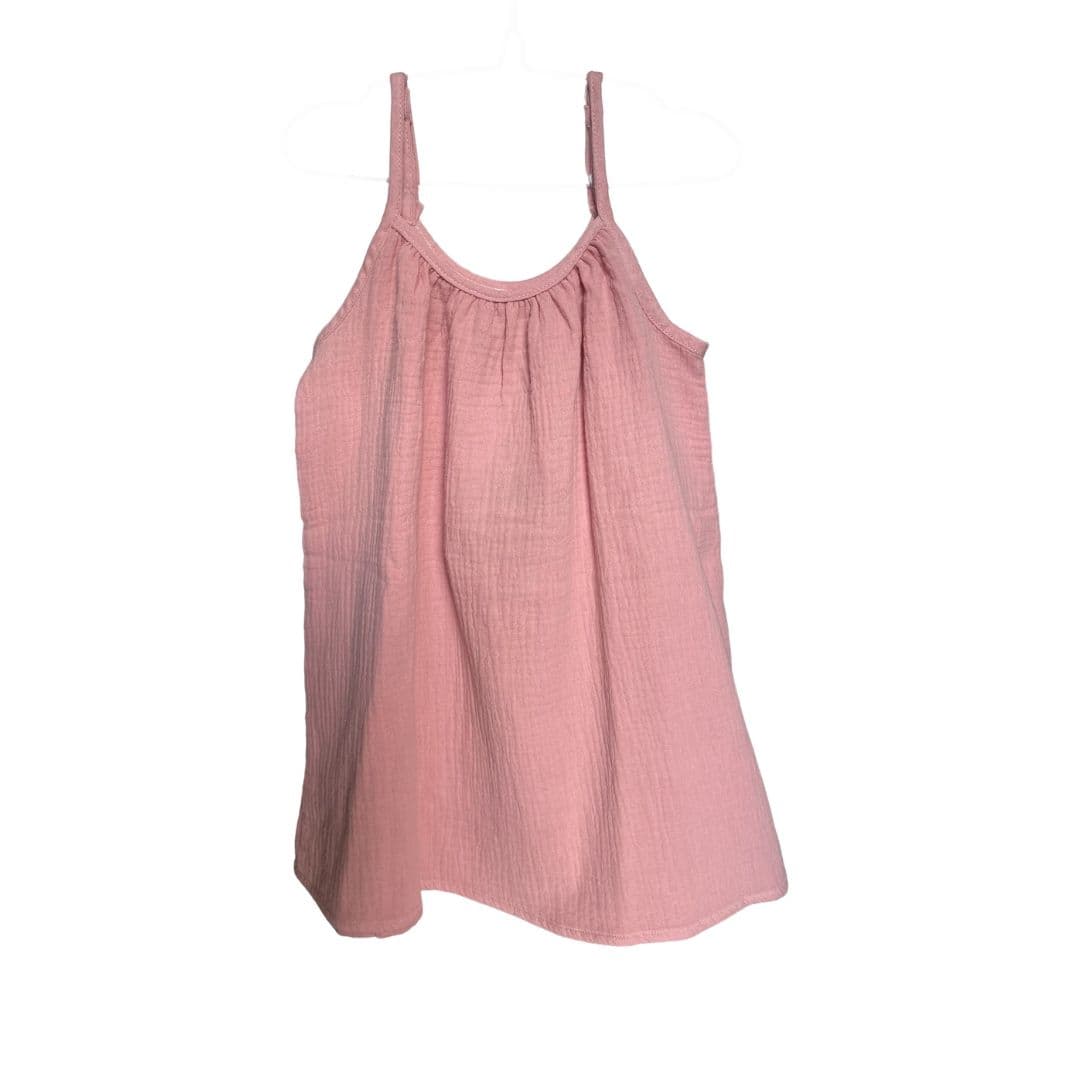
We reach for a muslin cotton long-sleeve as that base layer. Muslin cotton has a loose, open weave that lets air pass through rather than trap it against the skin, so it doesn't add heat stacked under a coat, but it still means she's not bare against a cold plane seat or an over-aircon'd cafe the moment the coat comes off. The base layer stays on through the whole trip. Everything else should come off in under a minute.
The freeze-then-sweat cycle, stop by stop
The freeze-then-sweat cycle is the pattern of a toddler overheating indoors and chilling outdoors across the same travel day, caused by dressing once for the cold instead of adjusting at each stop. It has the same shape no matter the destination: Bali heat at the door, a warm car to the airport, an aircon terminal, a warmer-than-expected cabin, arrival into real cold, a heated taxi or hotel lobby, and then finally outside again for whatever you came to do. Our long-haul flight guide covers the reverse version of this trip, tropics-bound, and much of the same layering logic applies in both directions.
Every one of those transitions is a moment where a layer should come off or go on, and in practice it's the transitions that get missed, not the destinations. Parents remember to bundle up before walking into the cold. They forget to peel a layer back off ten minutes later once they're in a heated car. Checking in at each doorway, not just at the start and end of the day, is what breaks the cycle. It's the same instinct Bali parents already use indoors, switching between an aircon bedroom and a hot verandah. Our piece on dressing for Bali's cold-hot days covers how that logic plays out at home.
What to pack for the trip north
- One real outer layer (coat or puffer), sized generously enough to zip over what's underneath
- Two or three breathable base layers she can wear alone indoors
- A mid layer with snaps or a front zip, not a pullover
- Thin cotton socks, plus a spare pair, cold floors reach little feet fast
- A layer she can nap in on the flight without overheating in a warm cabin
- One familiar piece from home, in case nothing else settles her on the first cold night
For the fuller version of this, including what Bali-based parents skip entirely, our honest packing list has the rest.
FAQs
Do I need a full winter coat for a toddler who's never seen cold weather?
No, a single real outer layer is enough for a toddler making a first trip from Bali to a cold-winter city, as long as it's sized generously enough to zip over a base and mid layer underneath. What matters more than the coat's warmth rating is how fast you can get her out of it once you're indoors.
How many layers is too many on a plane?
Two layers is usually enough on a plane: a single base layer plus one easy mid layer added before landing. Cabins tend to run warmer than people expect, especially on a full flight with blankets in circulation, so boarding already dressed for the destination's cold weather often means she overheats before you've even landed.
What's the most common mistake parents make on this kind of trip?
The most common mistake is dressing for the cold at departure and not adjusting again until arrival. The middle of the trip, the cars, terminals and cabins, is where most of the overheating happens, not the ten minutes spent outside in the real weather.
A note from Bali
We're writing this from a place that has never required us to own a proper winter coat, which makes us unlikely narrators for cold-weather travel advice. But the logic holds wherever you live: comfort doesn't come from the warmest piece, it comes from the piece that comes off fastest when a room, a car or a cabin gets too warm for her.
If you're packing for a trip north, look for a base layer that's soft against skin used to gentle fabric, not the itchy synthetic linings that come standard in most cold-weather kids' wear. That's the piece we think about most when we choose what to stock for families who live somewhere warm and are about to travel somewhere cold. We carry a few pieces we chose with exactly that kind of layering in mind, if you want somewhere to start.
From one parent to another
Dressing a little one for the heat?
Join the EPIC family for honest guides on dressing kids in the tropics, first look at new pieces, and 10% off your first order.
No spam, just the good stuff. Unsubscribe anytime.
Shop the pieces
More from Knowmads Bali
Born in Bali · Tested in the tropics
Muslin cotton, made for the heat
Breathable, soft, and built for real tropical days. Our onesies & playsuits are where most families start.