Onesies Off the Table: The Umbilical-Safe Newborn Wardrobe
Skip the onesie snap-fight, here's how to dress a newborn with an unhealed umbilical cord without a single button, snap, or airport meltdown.

To dress a newborn with an umbilical cord stump without pulling clothes over their head, skip the over-the-head onesie and reach for side-tie kimono tops or wrap bodysuits, plus a zip-front sleeper on top. These pieces open flat and fasten at the hip, so nothing crosses the stump and nothing pulls over her head. Diaper changes stay a one-person job.
Why the classic onesie waits its turn
The umbilical cord stump is the small dried piece of umbilical cord left attached at the belly button after birth, and it needs to stay dry and free from rubbing until it falls off on its own. That's the reason the over-the-head onesie waits its turn: it's what's in every gift box, but in the newborn stretch, before the stump dries and drops off, it asks for two things nobody wants at 3am, threading arms through narrow sleeves while a head wobbles, and dragging fabric straight across the belly on the way down.
Kimono-style tops are baby bodysuits that open flat down the front and tie or snap at the side instead of pulling over the head. They solve the first problem: no neckhole to negotiate, no moment where you're guessing whether an arm is actually through a sleeve or just jammed at an angle. Most families reach for these by instinct in the first couple of weeks, then switch back to regular onesies once the stump falls off.
The second habit worth building early: fold the diaper's front panel down, below the navel, rather than up over it. Some diapers are already cut with a little scoop there; if yours isn't, folding the waistband down does the same job. It keeps the diaper from resting against the stump and keeps that spot open to air instead of sealed under elastic.
What to actually pack
For the first two to three weeks, pack:
- 4-6 side-tie or wrap-style kimono tops (easy on, nothing over the head)
- 2-3 zip-front sleepers sized true newborn, not the "will grow into it" size up
- A few plain long tops that snap at the shoulder, for layering under a sleeper
- Diapers cut with a front notch, or a habit of folding the waistband down
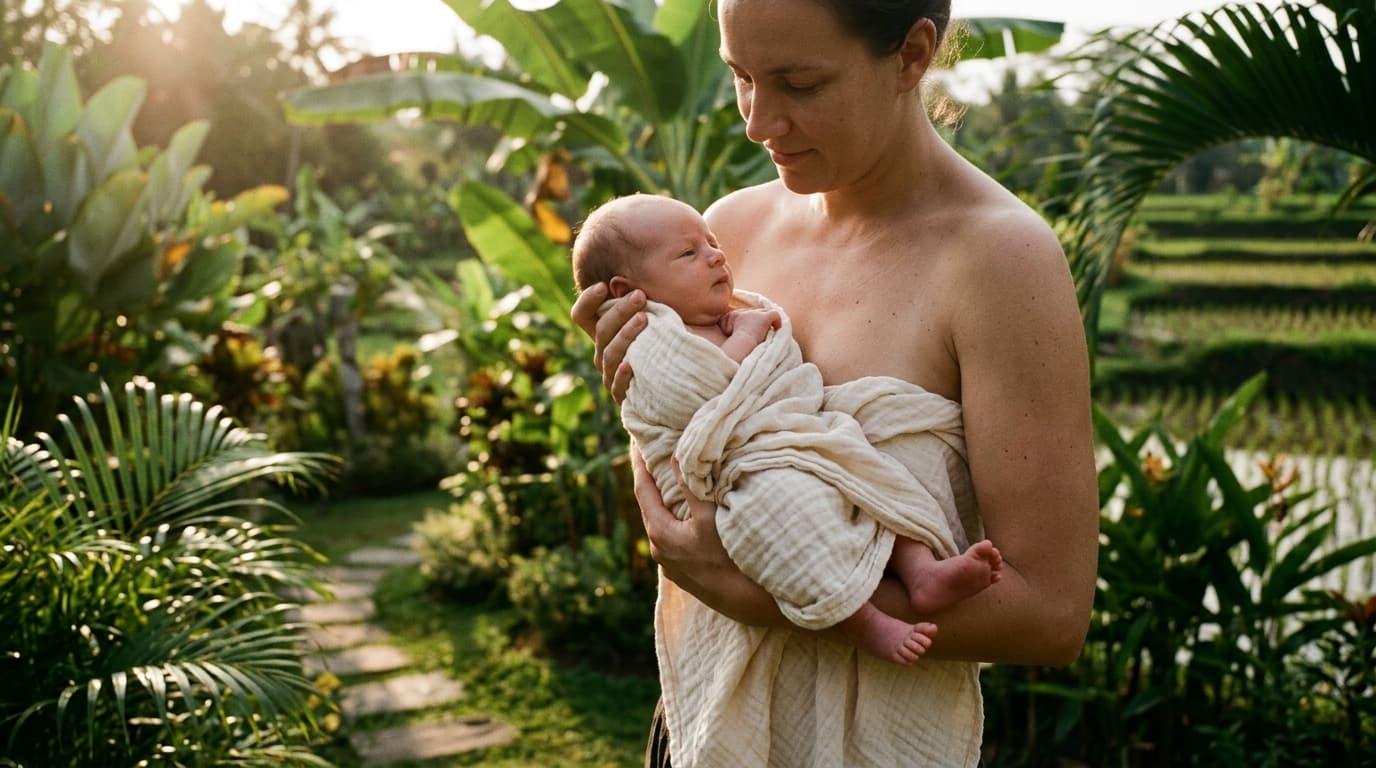
- One or two soft wraps or swaddles for the parts of the day she's not in a sleeper at all
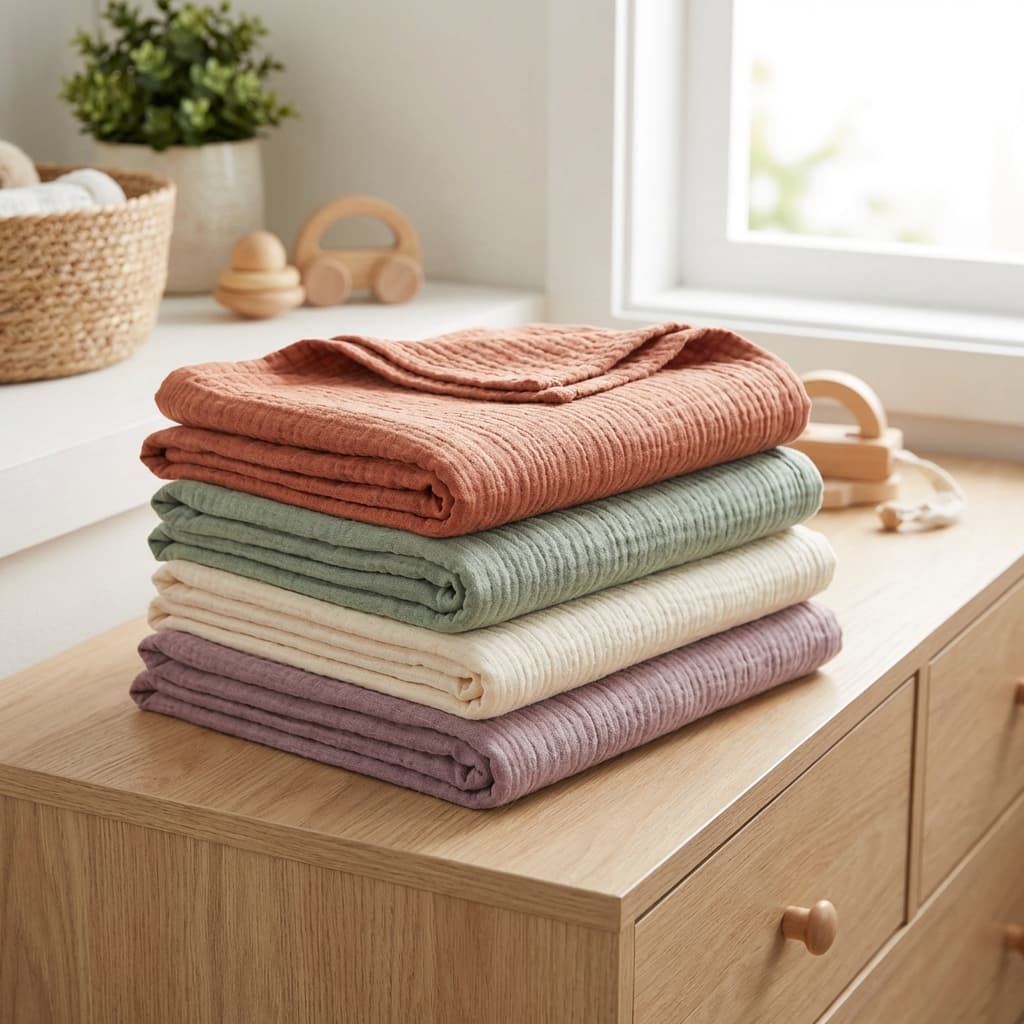
Fabric matters more here than it will later: muslin's open weave lets air move around the stump instead of trapping heat under elastic. Skip stiff fabric or heavy prints for these few weeks. If you're still working out how much of any given size you actually need, newborn size runs out fast walks through the real math.
Sleep and outings without the guesswork
Sleepers are where zip versus snap actually matters. Decide before week one, not during it. A full zip from ankle to chin means no fumbling with a row of snaps while she's fussing at 2am, and nothing pulls over her head either. If snaps are what you've already got, that's fine too, just watch that you don't catch fabric across the middle as you close them. We go deeper on the actual middle-of-the-night tradeoffs in snaps vs zippers on baby onesies.
For anything beyond the house, a wrap or swaddle over a simple side-tie top does double duty. It keeps her covered without adding another layer that has to go over her head, and it's easy to loosen or remove if she runs warm. Some families here also use a traditional Balinese belly wrap in these early weeks; if that's part of your world, Gurita Bayi: the newborn wrap Bali's grandmothers won't skip covers what that tradition actually involves.
This is a short window. Most families are back to ordinary onesies within a couple of weeks.
FAQs
Can I still use regular onesies at all during this time? Some families do, especially wrap-style or lay-down onesies that open fully rather than needing to go over the head. It's the over-the-head pull-on style, combined with tight elastic sitting right at the middle, that most people skip for a few weeks until the stump falls off.
What if I only have onesies and no side-tie tops on hand? A onesie that opens down the front, or one you gently step her legs into while leaving the top loose and open, gets you through in a pinch. It's less about a strict rule and more about avoiding rubbing near the stump until it heals.
How long does this stage actually last? The umbilical cord stump usually dries out and falls off within one to three weeks after birth, though the exact timing varies by baby. Ask your midwife or pediatrician if you're unsure about your baby's timeline. Most babies are back in normal clothing again within a few weeks of coming home.
A note from Bali
We know how many small decisions stack up in those first weeks, right down to what goes on and off her body ten times a day. When we choose pieces for that stretch, we look for soft, breathable fabric and layouts that don't fight you at 3am: side-openings and full zips instead of anything that has to go over a head. If that's useful to you, we source a small newborn edit built around exactly that kind of easy, gentle dressing.
From one parent to another
Dressing a little one for the heat?
Join the EPIC family for honest guides on dressing kids in the tropics, first look at new pieces, and 10% off your first order.
No spam, just the good stuff. Unsubscribe anytime.
Shop the pieces
More from Knowmads Bali
Born in Bali · Tested in the tropics
Muslin cotton, made for the heat
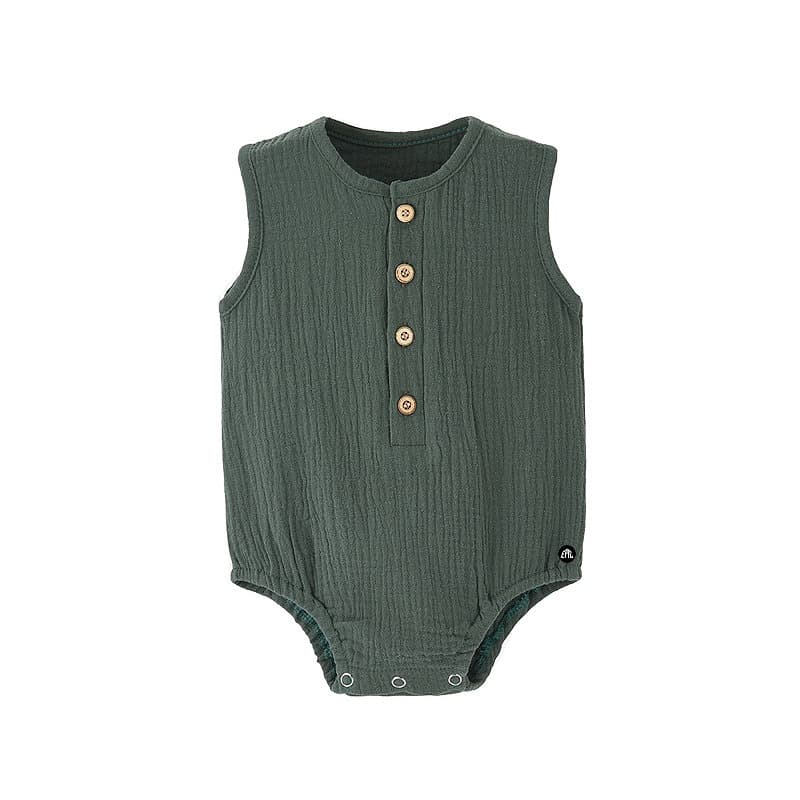
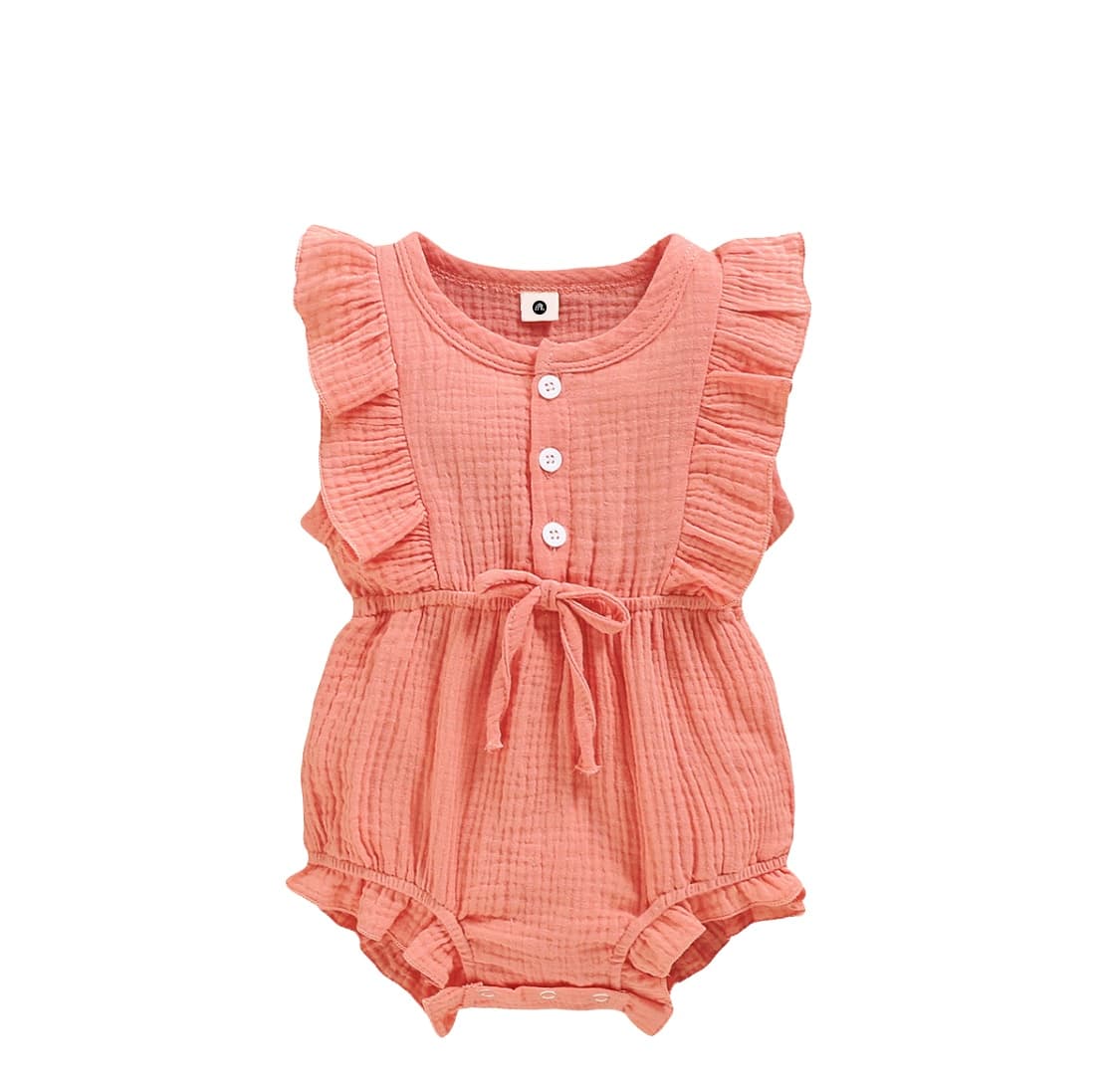
Breathable, soft, and built for real tropical days. Our onesies & playsuits are where most families start.