"How We Actually Split Toddler Duty and Work Calls in Bali"
Toddler tantrums during your 9am standup? Here's the real split-shift schedule we use in Bali to actually get work done without losing our minds.

How we actually split toddler duty and work calls in Bali
Working remote with a toddler in Bali comes down to a block system, not a clock: one of us takes the morning calls while the other covers breakfast, play, and errands, then we flip after lunch. A nanny, a co-working nap swap, or a grandparent covers the two or three hours neither of us can hold alone.
The block system, not the clock
The block system is splitting the workday into two- or three-hour chunks, each covered by one parent at a time, rather than holding continuous hours the way an office job assumes. The families we talk to who feel calmest about their days are not the ones with the tightest calendar, they're the ones who stopped trying to work in one continuous stretch and started thinking in blocks a toddler can survive.
Morning owns, afternoon flips
A common pattern: whoever has the harder calls that day claims the morning, when a toddler is usually at their most cooperative. The other parent runs breakfast, play, and the slow errands. After lunch, it flips. Neither of us is "on duty" for the whole day, and neither of us is fully off. That handoff, done at a set time rather than whenever it feels convenient, is what most families say saves them. A vague "I'll take over later" turns into a standoff by mid-afternoon. A stated time does not.
Protect the nap block like a meeting
Whatever block of quiet a toddler still gives you, most parents in Bali treat it the way they'd treat a client call: on the calendar, not the thing that gets bumped when a message comes in. A simple, repeatable signal helps: the same handful of steps, in the same order, so the toddler and the working parent both know what's coming. If you are still working out what that window even looks like here, our guide to reading nap cues in Bali's heat is a good place to start.
Getting help without losing the day to guilt
Nanny hours vs a co-working swap
Bali makes two kinds of help unusually accessible: a nanny for a few hours a day, or a co-working space with a kids' corner where you trade an hour of your own attention for an hour of someone else's. Families we know rarely pick one and stick with it. They mix: a nanny for the unmovable calls, a co-working swap with another parent for the days when getting out of the house matters more than the work itself.
The ritual that stays ours
Handing off care for part of the day does not mean handing off the whole relationship. Most parents keep one small ritual, maybe a specific song or the same walk every time, that stays theirs no matter who covered the afternoon. We wrote more about why that one piece matters in the ritual a nanny can never take from you. It is less about the activity itself and more about it being the same, every time, regardless of how the day went.
What we prep before a work day
A little preparation the night before buys back a surprising amount of the next day. A short list families we know keep close to the door:
- Two outfit changes laid out, since heat and spilled breakfast both happen fast
- A lightweight, breathable layer for nap time so getting settled doesn't become its own battle
- Water bottles filled and snacks portioned, so a hungry toddler isn't a mid-call surprise
- The handoff time written down somewhere both of you will actually see it
- One backup activity that needs no supervision, for the five minutes before a call starts
If your household is newer to Bali altogether, this dad's three-month packing reality check covers what actually earns its space in the bag versus what doesn't.
FAQs
Do we need a nanny to make this work? No. Some families run the whole thing on the block-and-flip system between two parents. A nanny or co-working swap buys more overlap time, but plenty of families in Bali manage without one, especially once the handoff becomes a habit rather than a negotiation.
What happens when a call runs long and the block schedule falls apart? It will, regularly. Most parents build in a ten to fifteen minute buffer around every handoff for exactly this reason. The buffer is what gets protected, not the original plan.
How do we split it fairly when one of us has a heavier week? Most couples we know stop trying to split every day fifty-fifty and instead settle it by the week. One partner takes more mornings during a heavy sprint, the other banks the difference for the following week. Weekly fairness holds up better than daily fairness.
A note from Bali
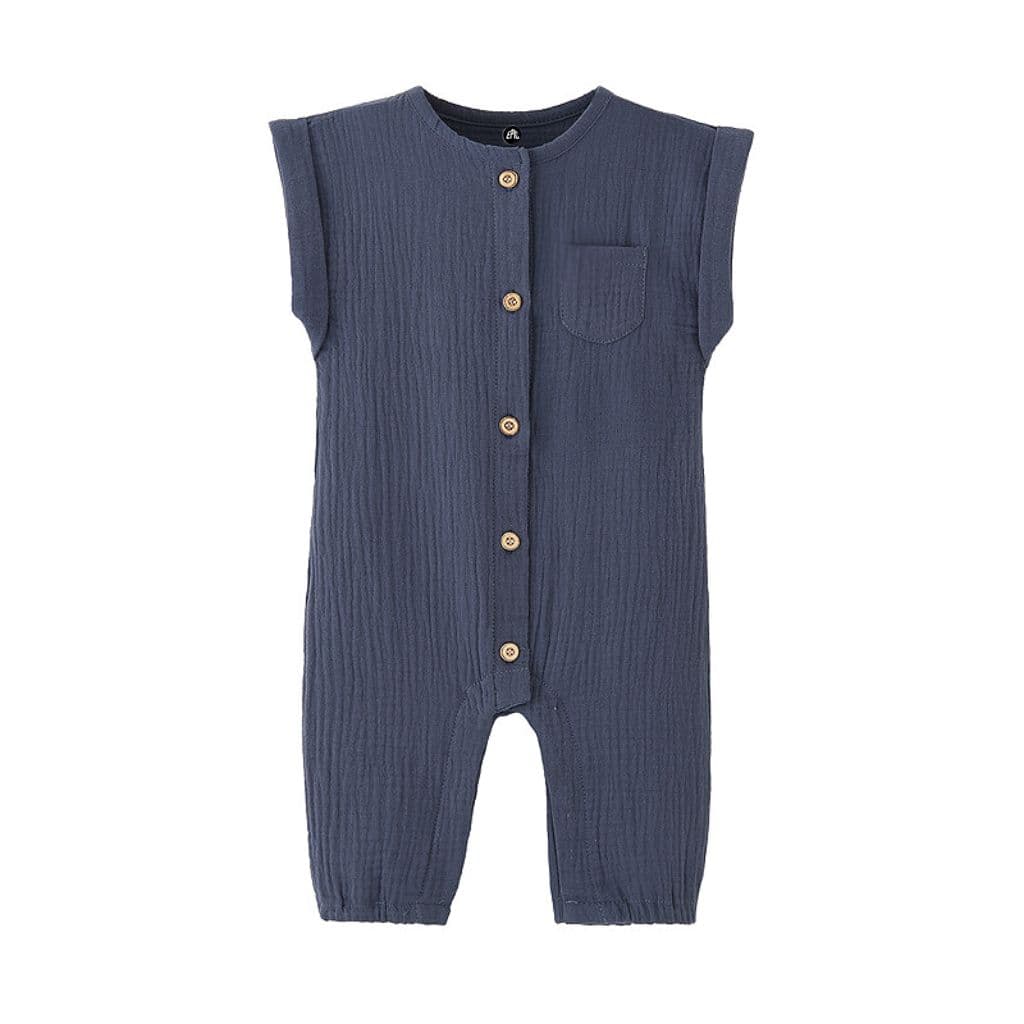
Every parent doing this juggling act agrees on one thing: the small frictions add up faster than the big ones. A toddler who settles into a nap easily buys you a real block of quiet. One who is fighting their clothes in the heat costs you the block you were counting on. It's part of why we pay attention to what a toddler wears for the slow hours of the day, not just the outings. The pieces we stock lean toward muslin, a loosely woven, lightweight cotton. An open weave lets more air pass through than a tighter weave, so a hot, sweaty toddler cools off faster and getting down for a nap is one less fight before your next call. However your days are split this week, we hope they get a little easier.
From one parent to another
Dressing a little one for the heat?
Join the EPIC family for honest guides on dressing kids in the tropics, first look at new pieces, and 10% off your first order.
No spam, just the good stuff. Unsubscribe anytime.
Shop the pieces


More from Knowmads Bali
Born in Bali · Tested in the tropics
Muslin cotton, made for the heat
Breathable, soft, and built for real tropical days. Our onesies & playsuits are where most families start.