Won't Dry Between Bouts: The Real Fix for Bali Drool Rash
Won't Dry Between Bouts: what's actually causing that stubborn Bali drool rash and how to keep your baby's skin dry and healed between reapplications.
How's the humidity ruining teething rash for a baby's face and neck, no matter what I try in Bali?
Teething rash stays bad on a baby's face and neck in Bali because the humid air stops the cloth against her skin from ever fully drying between drool bouts. The same damp patch sits there for hours instead of minutes, no matter how carefully or often you wipe. Changing what touches that skin, and how often, does more than wiping harder.
Why the same damp patch never quite dries out here
Anyone who has hung laundry on a line in Bali during wet season knows the feeling. A onesie that would be bone dry in an hour somewhere temperate can still feel faintly damp the next morning. Cotton dries through evaporation, and evaporation slows down whenever the surrounding air is already carrying a lot of moisture, which in Bali is most days, not just the odd rainy one. The same thing happens on a much smaller scale with a bib, a burp cloth, or the collar of a onesie against a teething baby's chin.
In a drier climate, a wipe and a few minutes of open air usually finishes the job. Here, the humidity doesn't help. The cloth stays damp longer, the skin underneath stays damp longer, and the next drool bout arrives before the last one has cleared. Families who've spent a dry season somewhere else often notice this the moment they land back in Bali. It's not that anyone is doing less wiping. It's that the air is doing less drying.
Mention it to your pediatrician if the skin looks irritated or isn't settling. A professional can tell you what you're actually looking at. What follows here is what we've noticed changes the daily pattern, not a diagnosis.
What's actually touching her skin matters more than how often you wipe
A lot of advice focuses on the wiping itself: wipe more, wipe gentler, wipe with this or that. In our experience, and in talking with other parents in similar humidity, the bigger lever is what the fabric does after the wipe.
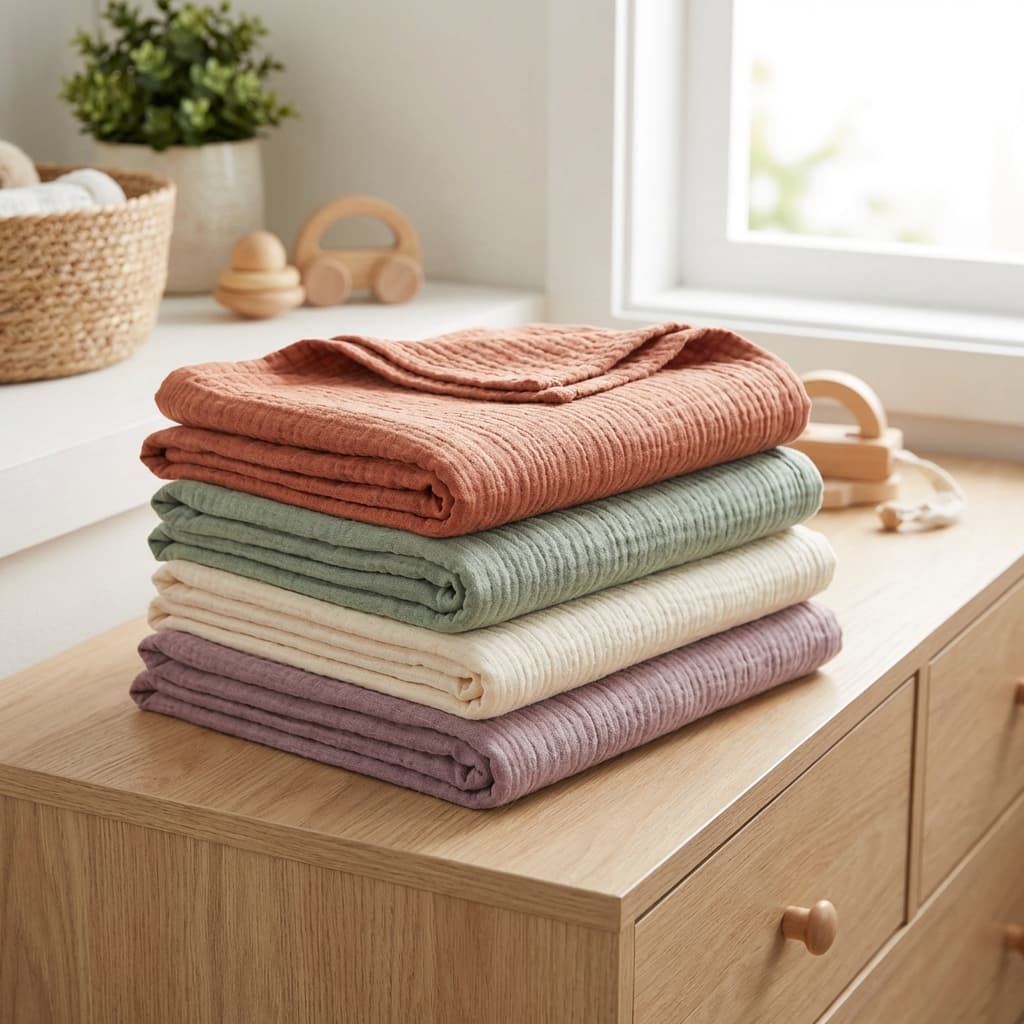
Terrycloth toweling is built to absorb and hold liquid, that's what makes it good for drying dishes and exactly why it works against a teething baby's chin: it's still holding that moisture against her skin twenty minutes later. A lighter, more open weave releases moisture faster and doesn't sit against the skin the same way. A soft, open necked muslin layer breathes better through the day than tighter, heavier fabric. This is one of the few places we'll point to a specific piece instead of a general rule.
What to look for on humid days
- A loose or open collar so drool doesn't pool where fabric meets skin
- A lightweight, open weave over anything thick or towel-like
- Soft edges rather than stiff trim, especially near the chin and neck
- Something that visibly dries fast when you hang it up between uses
- More than one on hand, so there's always a dry option ready
For more on how fabric weight interacts with Bali's heat generally, Baby heat rash clothes: what works and what makes it worse and Best Fabric for Baby Eczema in Heat? Why Muslin Wins cover ground that overlaps with drool rash more than you'd expect. It's the same damp-against-skin problem wearing a different name.
Building a rotation beats relying on one bib
The other thing that helps isn't a different product. It's timing. Most of us default to changing a bib once it's visibly soaked through. In this climate, that's often too late, because a soaked bib has already been transferring moisture back to the skin for a while before it looks obviously wet.
Parents who manage this best tend to swap proactively, on a rough schedule, rather than waiting for visible soaking, and keep three or four light options in rotation instead of washing and rewearing the same one. A spare in the diaper bag, a spare by the changing mat, a spare drying on the line. If you're building out a broader humidity packing list, Baby too hot? What to wear in humid heat (and what to skip) is a useful companion to this one.
FAQs
Is drool rash the same thing as heat rash? Drool rash is skin irritation caused by saliva sitting against a baby's skin for extended periods, most common on the chin, neck, and cheeks. Heat rash is a different condition caused by blocked sweat ducts trapping perspiration under the skin. They can look similar and both show up more often in humid climates, but they're not necessarily the same thing, check with your pediatrician instead of guessing from a description online if you're not sure which you're looking at.
How many bibs or burp cloths do we actually need in this kind of humidity? More than you'd pack for a drier climate. Drying time is slower here, so having enough in rotation to always reach for a dry one matters more than hitting a specific number.
Should we just skip bibs and let her neck air out instead? Some parents do exactly that when they're home and can watch closely. It's a reasonable call for some stretches of the day. The tradeoff is that without something absorbing the drool, it tends to run down onto whatever she's wearing instead, which brings the same damp-fabric question back in a different spot.
A note from Bali
If you're in this stretch right now, you already know it doesn't feel urgent from the outside. It just feels relentless. We look for lightweight, open-weave pieces for exactly this kind of day, the ones that dry fast on the line and don't hold onto moisture the way heavier fabric does. If that's useful to you, our muslin bibs and burp cloths are in the shop. If not, we hope this saved you a few minutes of guessing.
From one parent to another
Dressing a little one for the heat?
Join the EPIC family for honest guides on dressing kids in the tropics, first look at new pieces, and 10% off your first order.
No spam, just the good stuff. Unsubscribe anytime.
Shop the pieces
More from Knowmads Bali
Born in Bali · Tested in the tropics
Muslin cotton, made for the heat
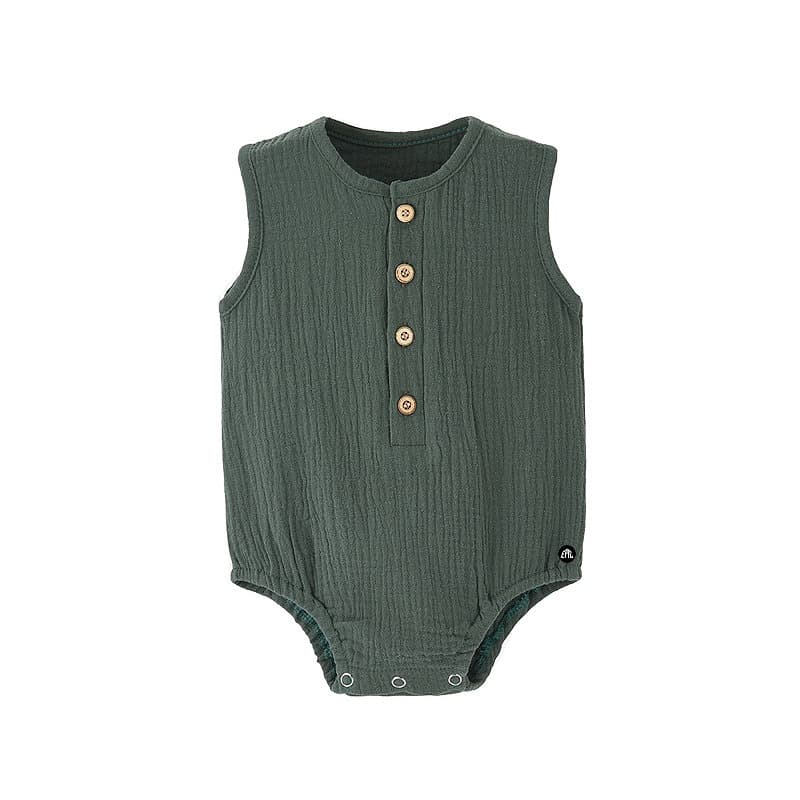
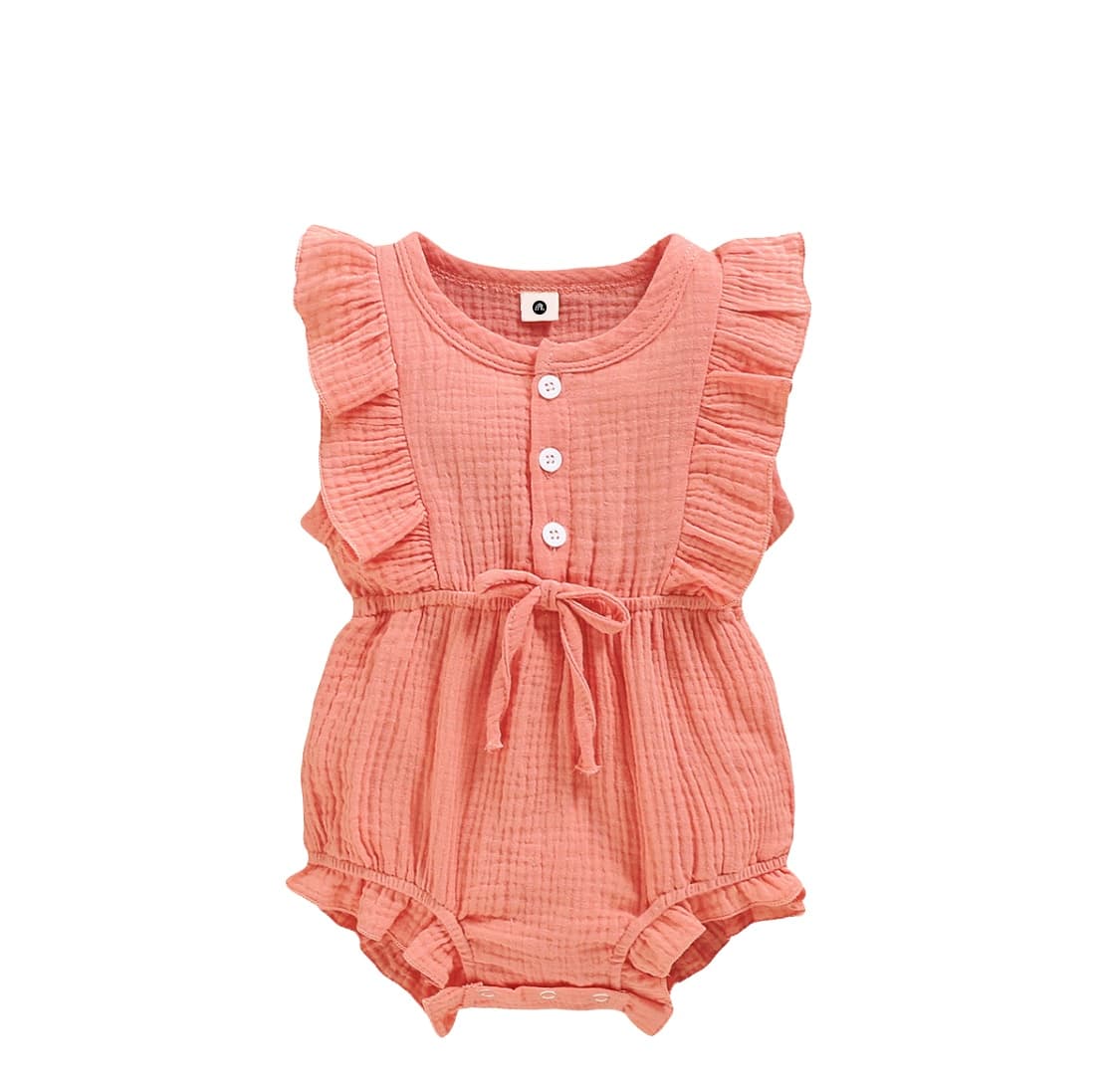
Breathable, soft, and built for real tropical days. Our onesies & playsuits are where most families start.