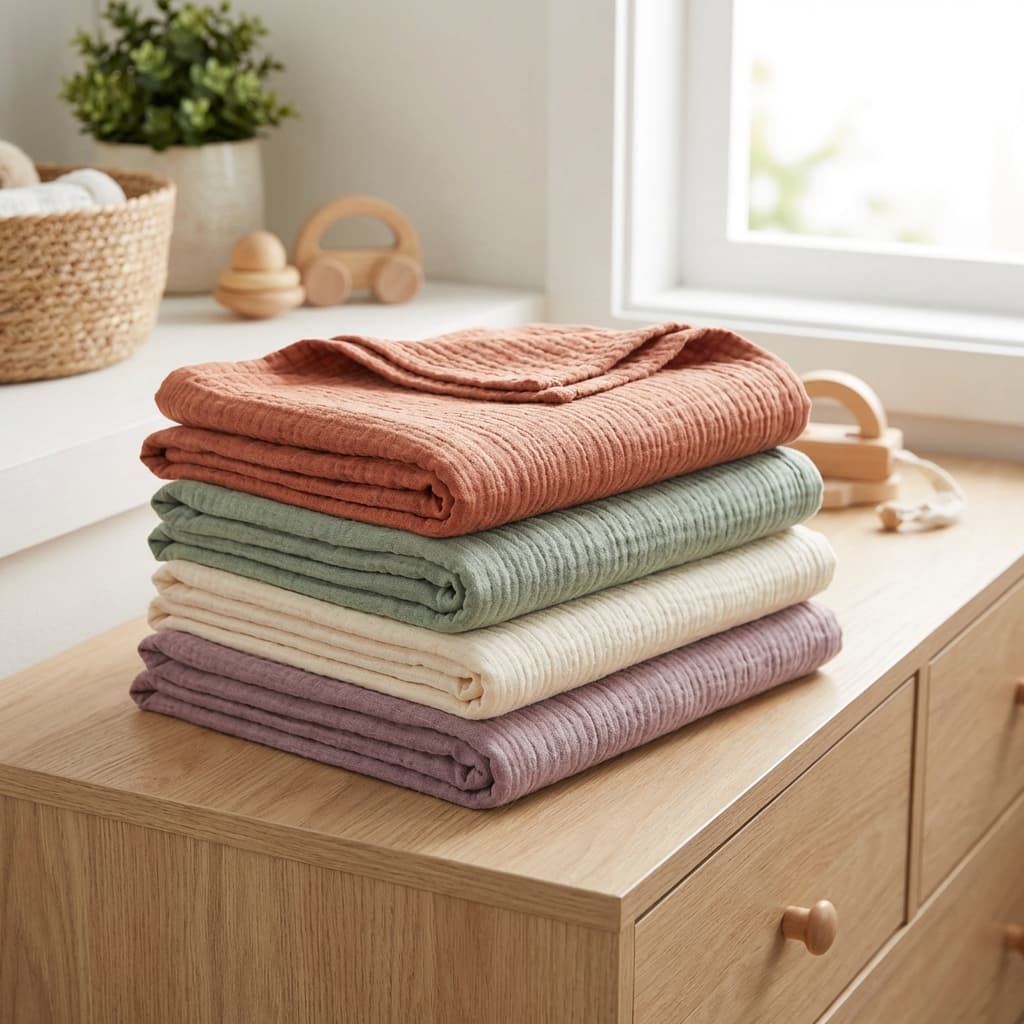
The Age-Gap Math That Decides If Hand-Me-Downs Survive
Hand-me-downs don't fail by chance, the age gap between kids decides it. Here's the math that tells you which muslin pieces survive the wait.

Most hand-me-down baby clothes made from lightweight, breathable fabric hold up well in clean, dry storage. But shelf time is the wrong number to watch: what actually decides whether a piece survives to the next kid is how many months it was worn before it went into the box, and how wide the age gap is between your children.
The real math isn't shelf time, it's wear time
Wear time is the total amount of use a garment gets before it's folded away, the months of daily wear, not the years it later spends on a shelf. Every garment carries an invisible odometer that tracks exactly that. A onesie worn daily for months before it gets folded away has a very different history than one worn briefly between growth spurts. Storage barely touches fabric once it's clean and dry. Wear is what uses it up: knees rubbing on floors, snaps opening and closing hundreds of times, waistbands stretching and releasing.
This is why two families can store the exact same size for the exact same number of years and end up with completely different results. The clothes that get handed down easiest are usually the ones barely worn in the first place, not the ones that spent the least time in a box.
Lightweight weaves, the ones many parents in the tropics reach for because they breathe, usually soften with washing instead of thinning out the way heavier knits do. That's a good sign for a second round, but soft fabric can still have weak stitching. Check the seams, not just how the fabric feels in your hand.
What the age gap between siblings actually changes
Under two years apart
A short gap is the easiest math. The clothes often come straight out of rotation and back into it, with barely any dormant time to worry about. The bigger risk here is fit, not fabric. Two kids at close ages can still grow at different rates, which is part of why 6-12 month co-ord pants can ride up when the top still fits even on a first wear, let alone a repeat one.
Two to four years apart
This is the range where storage conditions start to matter more than the fabric itself. The clothes sat for real time, so whatever environment they sat in becomes part of the story. Heat and humidity break down elastic fibers faster than cool, dry air does, so a damp storage spot ages a waistband or cuff faster than the calendar would suggest. A dry, breathable storage spot hands back clothes close to how they went in. A damp one doesn't, and in a tropical climate that difference shows up fast. Keep that in mind before you pack anything away for Bali's wet season.
Four or more years apart
At this distance, expect a mixed bag. Elastic and prints are usually the first to show their age, even when the weave itself still feels fine. Most families we talk to don't try to save everything. They keep the handful of pieces that wore lightest and plan to refresh the rest, the same instinct behind rebuying the coat and keeping the muslin.
What to look for before you hand a piece down
A quick check before anything goes back into rotation saves you from re-discovering a problem at 6am on laundry day.
- Waistbands and cuffs: do they spring back after a stretch, or stay loose
- Snaps and buttons: do they close snugly, or has the closure loosened with age
- Color and print: any yellowing, dulling, or spotting that wasn't there going in
- Seams and hems: fraying at the knees, cuffs, or collar
- Smell: neutral after airing out, or still carrying a stale, closed-box scent
If two or more of these fail, it's usually easier to let that piece go than to fight it through another kid's wardrobe.
FAQs
Does it matter if the clothes were stored folded versus hung? Yes, storage method matters over a long stretch. Folded storage holds up better than hanging for knits and soft wovens, because a hanger pulls at the shoulders and stretches out the neckline over time. For shorter storage windows, that difference rarely shows up as a visible problem.
Should every piece get handed down, or only some? Only some pieces should make the trip down to the next kid, not every piece automatically earns it. Skip anything that already failed the waistband, snap, or seam check, or that took heavy, concentrated wear in one specific way, like a single pair of pants worn through daily crawling.
Is there a sign a hand-me-down should go straight to donation instead of the next kid? If the elastic has lost its spring or the fabric has gone visibly thin in one spot, it has given what it had to give. Someone else's first kid may still get good use out of it, even if yours won't get a second round.
A Note from Bali
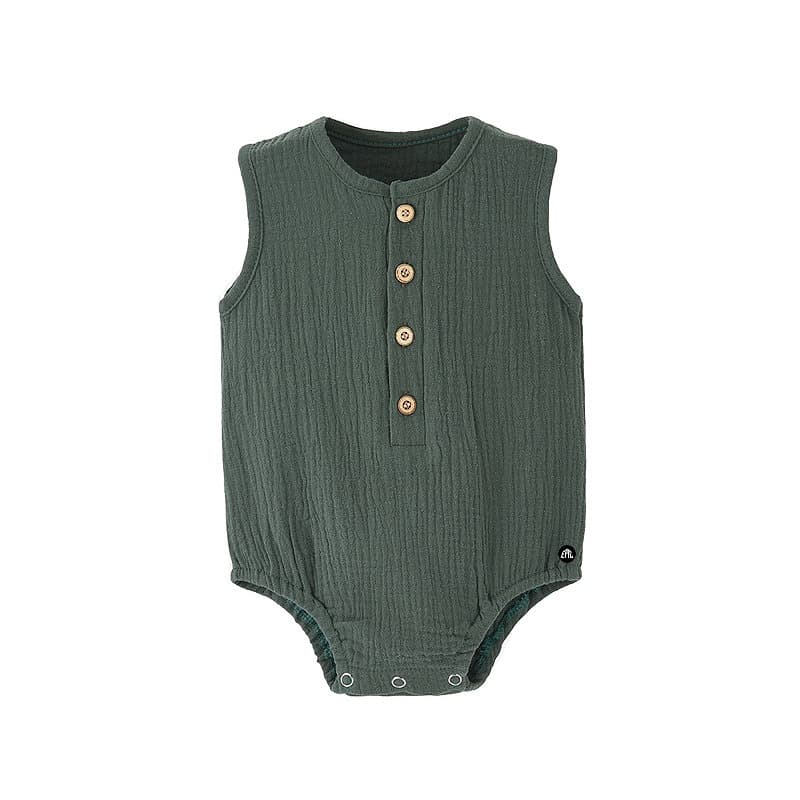
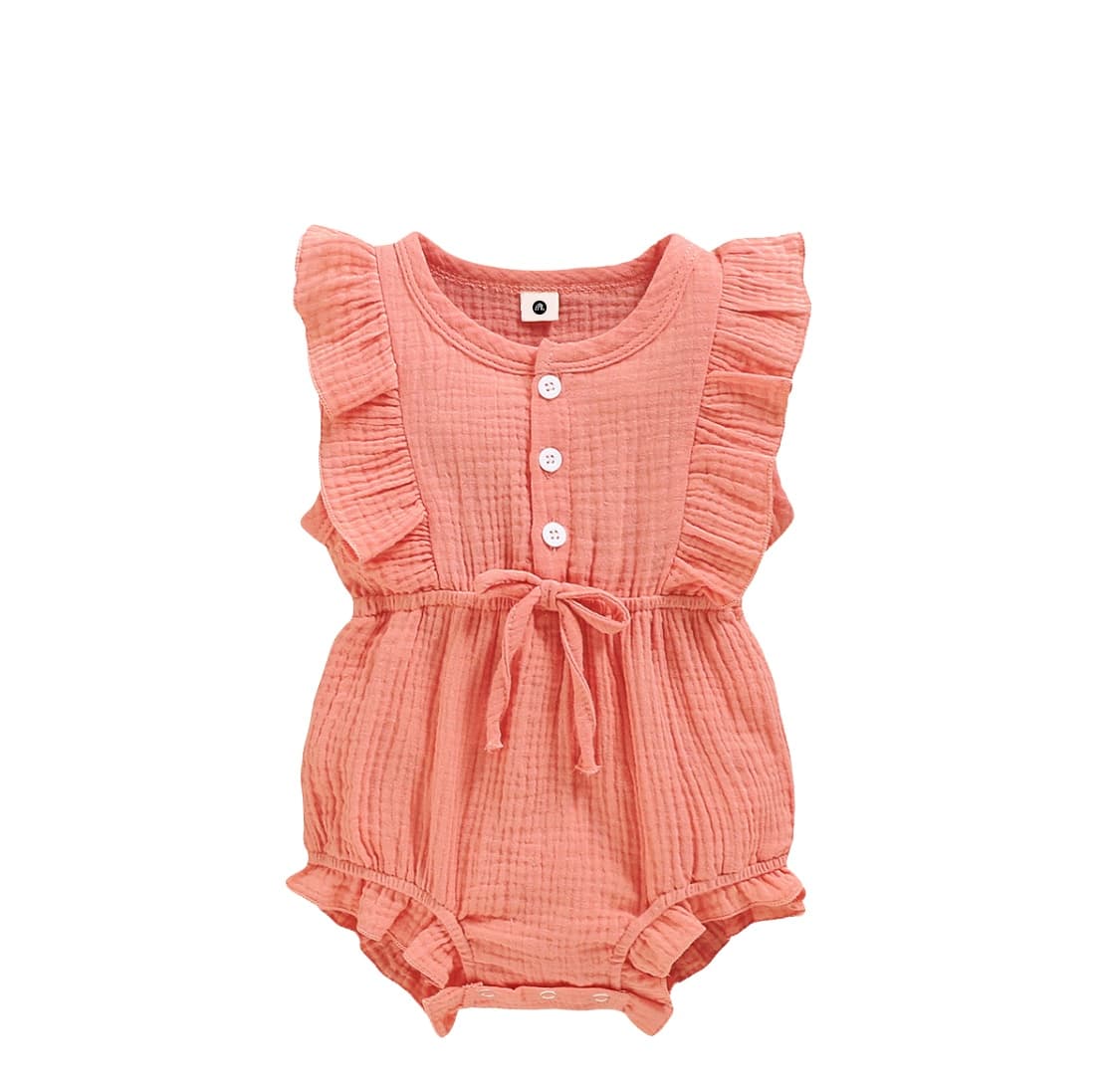
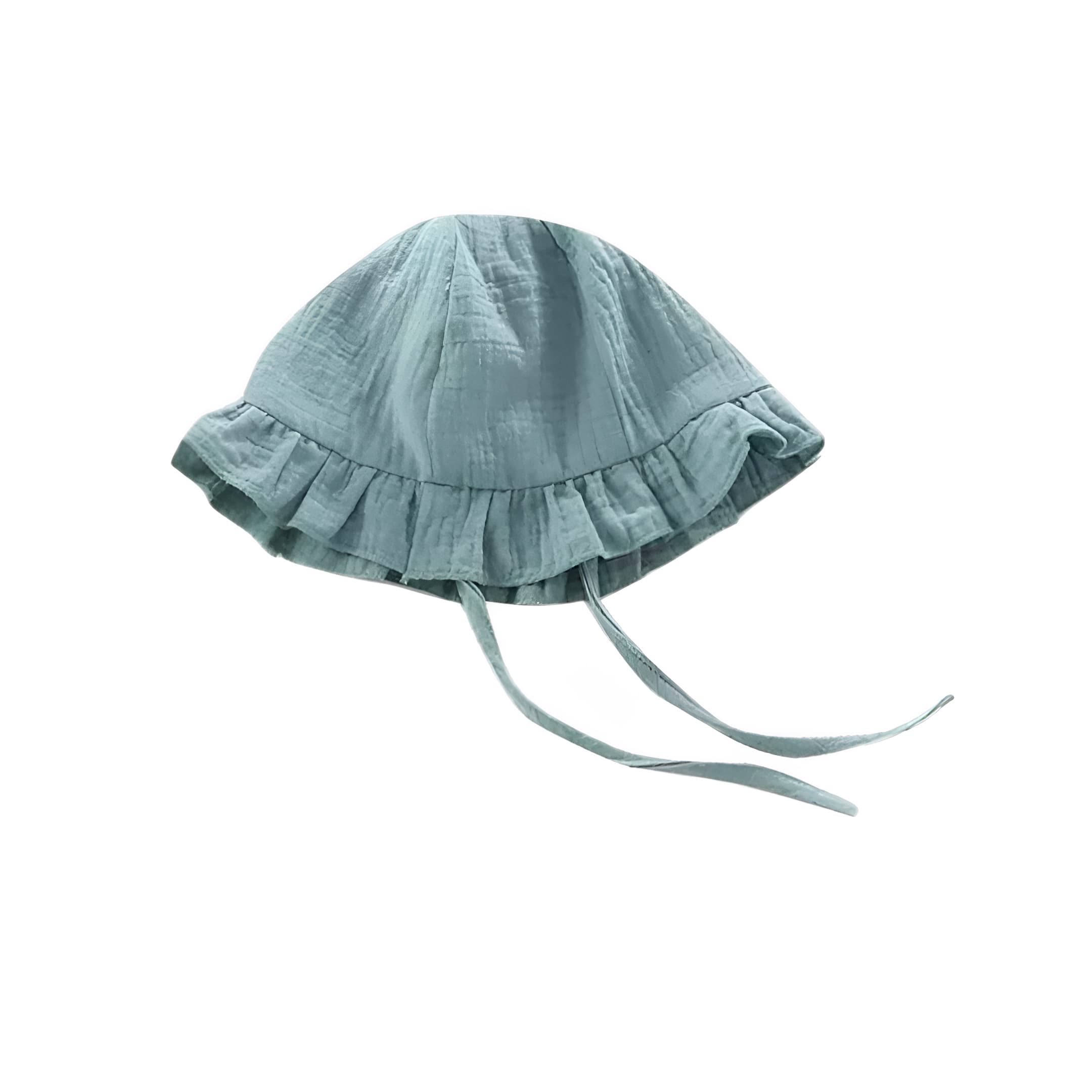
Sorting through outgrown clothes is a familiar task for any parent here, in a climate that isn't always kind to a box left closed too long. When we add new pieces into rotation, we look for fabric that's lightweight and breathable, and gentle on young skin. That combination gives a piece a real shot at surviving the handoff. If you're building a wardrobe with the next kid already in mind, we stock pieces made from that same lightweight weave, sized to layer and hand down.
From one parent to another
Dressing a little one for the heat?
Join the EPIC family for honest guides on dressing kids in the tropics, first look at new pieces, and 10% off your first order.
No spam, just the good stuff. Unsubscribe anytime.
Shop the pieces
More from Knowmads Bali
Born in Bali · Tested in the tropics
Muslin cotton, made for the heat
Breathable, soft, and built for real tropical days. Our onesies & playsuits are where most families start.